
Published: 17 November 2026 | CV Doctor New Zealand – Career News
New Zealand’s technology employment market is approaching 2027 amid artificial intelligence, digital transformation, changing economic conditions and increasingly selective recruitment practices.
For Software Engineers, IT Professionals, Cybersecurity Specialists, Cloud Engineers, Engineering Managers and Technology Executives, understanding the changing New Zealand employment market is essential when planning the next career move.
Auckland, Wellington, Christchurch, Hamilton, Tauranga and Dunedin support opportunities across software engineering, financial technology, cybersecurity, cloud infrastructure, artificial intelligence, health technology and advanced engineering.
However, competition for attractive positions can be significant, particularly for professionals targeting senior appointments, fully remote opportunities or specialised technical positions.
1. New Zealand’s Technology Job Market in 2027: What Do the Latest Figures Reveal?
According to Tech New Zealand’s October 2026 industry update, the country’s technology sector contributed approximately NZ$24.5 billion to GDP, supported 115,030 jobs and generated NZ$12.4 billion in exports.
The sector accounted for approximately 8.7% of national GDP, demonstrating the economic importance of technology, digital services and innovation.
However, the same report identified declines in technology employment, business numbers and research and development investment.
Meanwhile, Stats NZ reported that the national unemployment rate reached 5.7% in the September 2026 quarter, compared with 5.6% during the preceding quarter.
Approximately 174,000 people were unemployed, while the broader labour underutilisation rate reached 13.8%.
These figures indicate that New Zealand will enter 2027 with a substantial technology industry but a more challenging general employment environment than during earlier periods of strong recruitment.
2. New Zealand Technology Companies Continue to Expand Internationally
Despite challenging domestic employment conditions, New Zealand’s internationally focused technology companies have demonstrated continued commercial growth.
According to the Technology Investment Network’s 2026 TIN Report, published on 16 November 2026, the country’s 200 largest technology exporters generated NZ$23.34 billion in annual revenue, representing growth of 13.7%.
International revenue reached NZ$18.4 billion, while ICT revenue increased by 19.1% to NZ$10.7 billion.
The TIN200 companies employed approximately 66,213 people globally, including 35,405 employees within New Zealand.
Domestic employment among these companies increased by approximately 6%.
These results demonstrate that internationally successful technology businesses can continue expanding even when the wider domestic employment market faces difficulties.
However, growth among leading technology exporters should not be interpreted as evidence of equally strong recruitment across the entire sector.
3. Why Are Experienced IT Professionals Struggling to Secure Interviews?
New Zealand has an established technology workforce and attracts qualified professionals from across the world.
However, experienced candidates can still encounter difficulties securing interviews despite possessing strong technical backgrounds.
Possible reasons include competition, specialised technical requirements, employer caution, salary expectations and differences between a candidate’s experience and the employer’s immediate requirements.
Another important factor is the quality of the candidate’s CV.
Many technology CVs contain extensive lists of programming languages, frameworks and responsibilities without demonstrating measurable achievements.
Employers need to understand how candidates have improved software performance, reduced operational costs, strengthened cybersecurity, delivered complex programmes or successfully led engineering teams.
A professionally positioned CV can communicate this value more effectively.
4. Artificial Intelligence and the Future of Technology Jobs in New Zealand
Artificial intelligence is transforming software engineering, IT operations, data analytics, cybersecurity, financial technology and enterprise systems.
AI-assisted coding, automated testing, intelligent monitoring platforms and machine learning systems are changing how technical work is performed.
According to Tech New Zealand’s August 2026 digital skills report, artificial intelligence emerged as the most sought-after future skill among surveyed public and private sector organisations.
More than half of surveyed organisations expected recruitment for digital roles to increase over the following 12 months.
However, automation of individual tasks does not necessarily mean that entire technology professions will disappear.
Experienced professionals remain important for software architecture, complex systems integration, infrastructure design, cybersecurity, technical governance and strategic decision-making.
For 2027, professionals combining advanced technical expertise with AI awareness, adaptability and commercial understanding may be particularly well positioned.
5. Which Technology Skills Will Be Important in New Zealand in 2027?
New Zealand’s technology employment market supports a broad range of professional specialisations, including:
- Software Engineering and Software Architecture
- Artificial Intelligence and Machine Learning
- Cybersecurity and Information Security
- Cloud Engineering and Infrastructure
- DevOps and Site Reliability Engineering
- Data Engineering and Business Intelligence
- Financial Technology and Banking Systems
- Embedded Software and Industrial Technology
- Enterprise Applications and SAP
- Technical Programme and Product Management
- Engineering Management and Technology Leadership
Demand varies considerably according to employer, location, industry and technical specialisation.
Professionals should assess individual vacancies rather than assume that all technology occupations offer identical recruitment prospects.
6. Technology Jobs in Auckland
Auckland is New Zealand’s principal commercial and technology centre, supporting software development, financial technology, cybersecurity, cloud infrastructure, enterprise systems and international technology operations.
Career opportunities can include Senior Software Engineer, Cloud Architect, Cybersecurity Manager, Technical Programme Manager, Engineering Manager and Technology Director.
The city also supports technology employment within banking, insurance, telecommunications, logistics, healthcare and professional services.
Internationally recognised New Zealand technology businesses maintain substantial operations in Auckland.
7. Technology Jobs in Wellington
Wellington has an established technology ecosystem involving government digital services, cybersecurity, software development, enterprise systems and professional consulting.
Relevant opportunities include Software Engineering, Cloud Infrastructure, Data Engineering, Information Security, Digital Transformation and Technology Leadership.
Wellington also supports technology roles within public-sector organisations and specialist consulting businesses.
Some government positions may have citizenship, residency or security clearance requirements.
8. Technology Jobs in Christchurch, Hamilton, Tauranga and Dunedin
Christchurch
Christchurch supports software engineering, electronics, advanced manufacturing, aerospace-related technology, industrial automation and specialist engineering services.
Hamilton
Hamilton offers opportunities involving agritech, software development, enterprise IT, data analytics, agricultural technology and industrial systems.
Tauranga
Tauranga supports logistics technology, port-related digital systems, software services, automation and regional business technology.
Dunedin
Dunedin has an established university and research environment supporting software development, health technology, scientific computing and specialist digital businesses.
9. Major Technology Employers in New Zealand
Technology organisations with established New Zealand activities include Xero, Datacom, Fisher & Paykel Healthcare, Rocket Lab, Vista Group, Serko, Pushpay, Spark, One New Zealand, Microsoft and numerous specialist software businesses.
Technology professionals may also find opportunities with major banks, telecommunications companies, healthcare organisations, engineering businesses and government agencies.
The presence of an employer in New Zealand does not necessarily mean that vacancies are currently available.
Candidates should monitor official employer career pages, specialist recruitment agencies and professional networks.
10. International Technology Professionals Seeking Employment in New Zealand
New Zealand attracts technology professionals with experience in international software development, cloud infrastructure, cybersecurity, engineering and technology management.
However, employment opportunities depend on employer requirements, qualifications, experience and the candidate’s right to work in New Zealand.
Some employers may consider international applicants, while others require existing New Zealand work authorisation.
Visa requirements and occupation eligibility should always be checked through official Immigration New Zealand sources.
International candidates should ensure their CV communicates relevant technical achievements in a format suitable for New Zealand employers.
11. How to Prepare a Competitive Technology CV for New Zealand
A professional technology CV should demonstrate technical expertise, career progression, leadership responsibilities and measurable achievements.
Software Engineers
Senior Software Engineers should highlight software architecture, scalability, system performance, technical problem-solving and relevant project outcomes.
Cloud Engineers and DevOps Specialists
Cloud and DevOps professionals should demonstrate infrastructure automation, cloud migration, deployment improvements, operational reliability and cost optimisation.
Engineering Managers
Engineering Managers should communicate people leadership, resource planning, technical delivery, team development and measurable programme results.
Technology Directors and Executives
CTOs, IT Directors and senior technology executives should highlight technology strategy, organisational transformation, budget responsibility, international leadership and commercial achievements.
12. ATS and AI Recruitment: How to Optimise Your New Zealand Technology CV
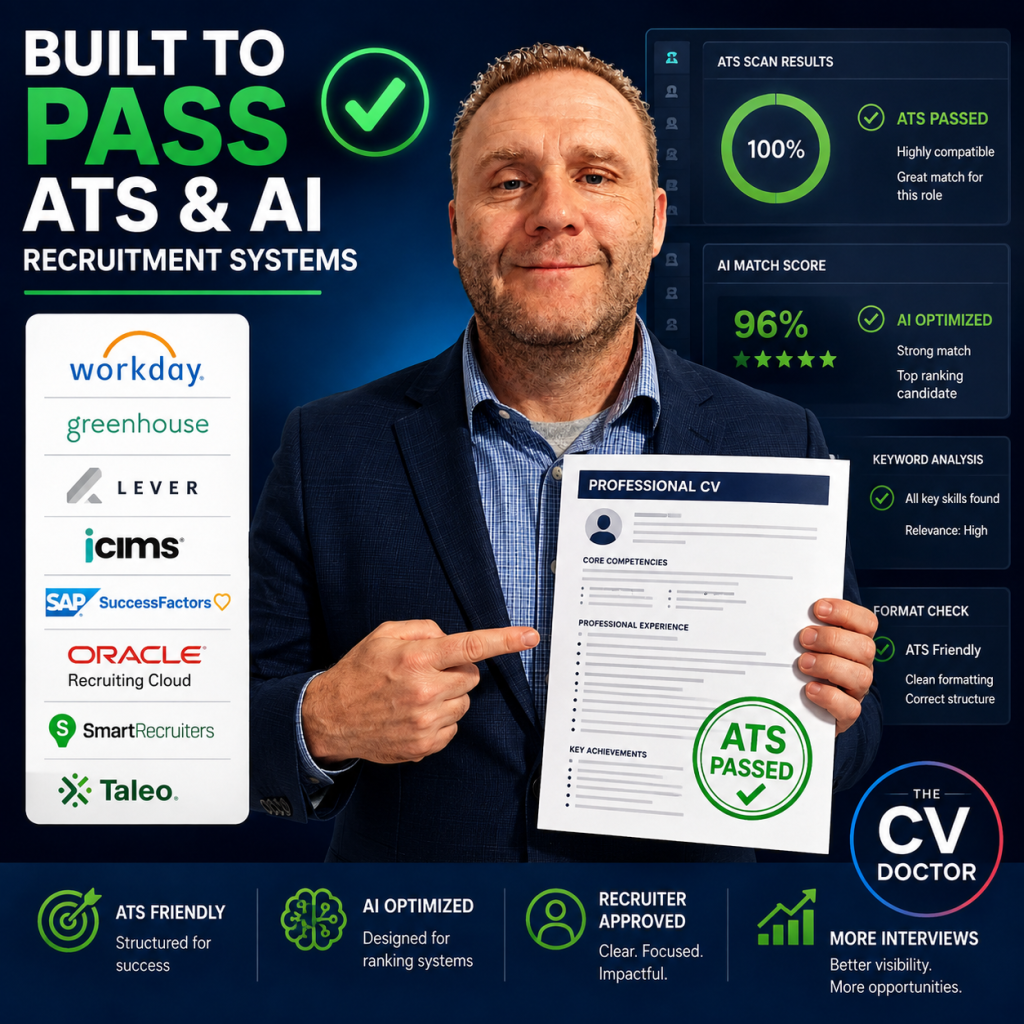
Many New Zealand employers use Applicant Tracking Systems (ATS) and digital recruitment platforms to manage applications.
A professionally structured CV should include clear headings, consistent employment dates, relevant technical terminology and an easily readable layout.
Complicated designs, unnecessary graphics and poorly organised employment histories can make some applications harder to interpret.
Relevant keywords should reflect genuine experience and the requirements of individual vacancies.
For example, a Cloud Engineer may include AWS, Azure, Kubernetes, Terraform, CI/CD and Infrastructure as Code where appropriate.
A Software Engineer may highlight Java, Python, C++, Go, Distributed Systems, Microservices and Software Architecture.
However, technical keywords should complement rather than replace evidence of professional achievements.
13. Should You Use ChatGPT to Write Your New Zealand CV?
ChatGPT and other AI tools can help candidates review vacancies, identify relevant terminology and improve application wording.
However, automatically generated CVs can be generic, repetitive and insufficiently focused on measurable achievements.
For experienced professionals, an effective CV requires careful consideration of technical specialisation, career progression, leadership responsibilities and commercial contributions.
Every qualification, technology and achievement should accurately reflect the candidate’s experience.

14. Professional CV Writing Services New Zealand
At CV Doctor New Zealand, we specialise in professional CV writing for Software Engineers, IT Professionals, Cybersecurity Specialists, Engineering Managers and senior Technology Executives.
Our services include Professional Technology CV Writing, Executive CVs, Cover Letters and LinkedIn Profile Optimisation.
We support professionals targeting employment in Auckland, Wellington, Christchurch, Hamilton, Tauranga, Dunedin and throughout New Zealand.
Our approach combines ATS-compatible formatting, strategic keywording, measurable achievements and clear professional positioning.
Rather than simply listing responsibilities, we focus on demonstrating the technical, leadership and commercial value candidates bring to prospective employers.
15. New Zealand Technology Jobs 2027: The Employment Outlook
New Zealand remains an established technology and innovation market, supported by software development, international technology exports, financial services, health technology and specialist engineering expertise.
However, recruitment conditions in 2027 will depend on economic developments, employer investment decisions and individual technical requirements.
Professionals who demonstrate relevant expertise, adaptability, leadership experience and measurable achievements can strengthen their competitiveness.
Planning your next technology career move in New Zealand?
Visit CV Doctor New Zealand for Professional CV Writing, Executive CVs, Cover Letters and LinkedIn Profile Optimisation.
Sources: Tech New Zealand, Technology Sector Metrics October 2026; Technology Investment Network, TIN Report November 2026; Stats NZ, Labour Market Statistics September 2026; Tech New Zealand, Digital Skills Report August 2026. The 2027 outlook reflects information available in November 2026.